

Endoscopic valve assembly: Technical Overview, Applications, and Industry Insights
Endoscopic valve assemblies are critical components in modern minimally invasive surgical instruments. Designed to regulate the flow of gases, fluids, and surgical Tools within endoscopes, these assemblies ensure procedural safety, operational efficiency, and device longevity. By providing airtight seals and precise control, endoscopic valve assemblies enable surgeons to perform complex diagnostic and therapeutic procedures with minimal patient trauma. Their integration into medical devices underscores their importance in laparoscopic surgery, urology, gastroenterology, and other endoscopic interventions.
The global demand for endoscopic valve assemblies is driven by the increasing adoption of minimally invasive surgeries, advancements in laparoscopic technology, and rising prevalence of gastrointestinal, urological, and gynecological disorders. Key market drivers include:
Minimally Invasive Procedures: Laparoscopic and endoscopic surgeries reduce patient recovery time, infection risk, and hospital stay duration, prompting widespread adoption.
Technological Integration: Complex instruments require precise flow regulation and tool passage through endoscopes, making reliable valve assemblies essential.
Regulatory Standards: Medical device compliance with ISO 13485, CE marking, and FDA guidelines ensures safety, sterility, and performance reliability.
Hospital and Surgical Center Investments: Institutions prioritize high-quality, durable endoscopic components to support procedural efficiency and patient outcomes.
As surgical practices evolve, B2B buyers increasingly seek valve assemblies that balance performance, reliability, and cost-effectiveness.
Endoscopic valve assemblies are engineered to provide controlled access to the endoscope’s working channels while maintaining airtight integrity. Key technical concepts include:
Flow Regulation: Valves must allow controlled passage of instruments or fluids while preventing unintended gas leakage.
Seal Integrity: O-rings, diaphragms, and elastomeric seals maintain airtight environments essential for insufflation and visualization.
Instrument Compatibility: Assemblies accommodate a range of laparoscopic and endoscopic tools, from biopsy forceps to suction devices.
Ergonomic Design: Valve Handles and ports must allow rapid, intuitive operation by surgeons during procedures.
Sterilization Resistance: Materials and coatings must withstand repeated autoclaving or chemical sterilization without degradation.
Advanced assemblies integrate features such as rotatable valves, quick-release mechanisms, and modular components to optimize surgical workflow.
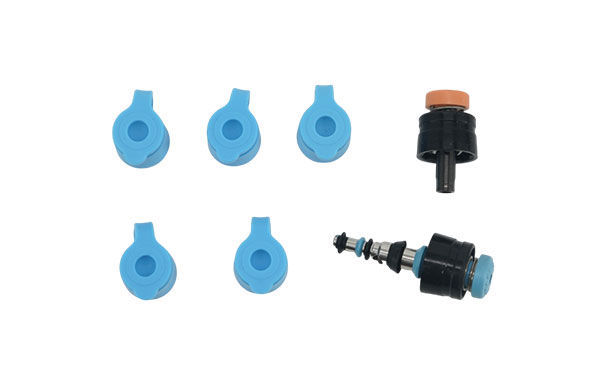
An endoscopic valve assembly typically consists of:
Valve Body: Usually constructed from medical-grade polymers or corrosion-resistant metals, providing structural stability and resistance to chemical sterilants.
Sealing Components: Silicone, thermoplastic elastomers, or fluoropolymer diaphragms create airtight seals for insufflation and fluid control.
Rotating or Sliding Valve Mechanisms: Precision-machined parts regulate flow and instrument passage without leakage.
Instrument Ports: Multiple channels allow simultaneous insertion of surgical instruments, suction devices, or insufflation tubes.
Ergonomic Handles: Facilitate intuitive control and adjustment during procedures.
Manufacturing processes include Injection molding, precision CNC machining, ultrasonic welding, and rigorous assembly inspections. Each component undergoes dimensional verification, material testing, and functional evaluation to ensure long-term performance under clinical conditions.
The reliability and safety of endoscopic valve assemblies depend on several critical factors:
Material Selection: Biocompatible polymers and metals must resist corrosion, chemical exposure, and repeated sterilization.
Seal Performance: Poorly designed or worn seals can cause gas leakage, loss of insufflation, or contamination risk.
Dimensional Accuracy: Tolerances in valve mechanisms affect instrument fit, flow control, and ergonomic operation.
Assembly Precision: Misalignment or inadequate calibration can compromise device functionality.
Sterility and Packaging: Proper sterilization and protective packaging prevent microbial contamination prior to use.
Attention to these factors ensures consistent performance, reduces procedural risks, and prolongs device life.
B2B procurement of endoscopic valve assemblies requires careful supplier evaluation:
Regulatory Compliance: Suppliers must adhere to ISO 13485, CE, and FDA standards to ensure product safety and reliability.
Material Traceability: Verified medical-grade materials prevent contamination and performance failures.
Manufacturing Capabilities: Suppliers should demonstrate precision molding, machining, and assembly expertise.
Quality Management: Documented inspection protocols, batch testing, and functional verification minimize variability.
Customization and Innovation: Ability to design modular or device-specific assemblies supports evolving surgical technologies.
Strong supplier relationships reduce supply chain risks and enable timely delivery of high-quality assemblies to medical institutions.
Despite technological advancements, several challenges persist in the endoscopic valve assembly market:
Seal Degradation: Repeated sterilization cycles or chemical exposure may weaken elastomeric seals.
Instrument Compatibility: Variations in surgical tool dimensions require adaptable port designs.
Operational Ergonomics: Poorly designed valve handles can hinder rapid instrument changes during surgery.
Regulatory Complexity: Compliance with diverse international standards adds design and manufacturing complexity.
Cost-Performance Tradeoffs: High-performance materials increase costs, while budget alternatives may compromise longevity or reliability.
Addressing these challenges requires stringent quality control, material validation, and careful ergonomic design.
Endoscopic valve assemblies are used extensively across surgical disciplines:
Laparoscopic Surgery: Regulating gas insufflation, instrument access, and suction in abdominal procedures.
Urological Endoscopy: Guiding instruments for kidney stone removal, bladder procedures, or ureteroscopic interventions.
Gastrointestinal Endoscopy: Facilitating biopsy, polyp removal, and fluid management during endoscopic examinations.
Thoracic Surgery: Supporting minimally invasive procedures requiring controlled access to pleural or pulmonary cavities.
Robotic Surgery Integration: Valve assemblies enable instrument routing and flow control in robotic-assisted systems.
These use cases highlight the critical role of reliable, ergonomic, and airtight valve assemblies in modern surgical practice.
The endoscopic valve assembly sector is evolving in several directions:
Material Innovation: Advanced polymers and composite materials enhance durability, reduce weight, and improve sterilization resistance.
Modular Designs: Interchangeable or customizable components allow rapid adaptation to different endoscopes and instruments.
Enhanced Ergonomics: Improved handle designs and intuitive mechanisms facilitate faster instrument changes.
Automation and Robotics: Integration with robotic surgical systems enhances precision, control, and procedural efficiency.
Sustainability: Biocompatible, reusable, or recyclable materials reduce environmental impact and procedural costs.
Future assemblies will increasingly combine precision engineering, modularity, and smart design features to support a growing range of minimally invasive surgical procedures.
Q1: How do I choose the right endoscopic valve assembly?
A1: Consider instrument compatibility, seal integrity, material durability, and regulatory compliance.
Q2: Can these assemblies withstand repeated sterilization?
A2: Yes, high-quality assemblies are designed for multiple autoclave or chemical sterilization cycles without performance loss.
Q3: Are modular valve assemblies available?
A3: Many suppliers offer interchangeable or device-specific modular components to support different surgical tools and procedures.
Q4: What industries use these assemblies?
A4: Primarily medical device manufacturers, hospitals, surgical centers, and research institutions performing endoscopic procedures.
Conclusion
Endoscopic valve assemblies are indispensable in modern minimally invasive surgery, providing airtight seals, controlled instrument access, and ergonomic operation. Material selection, precision manufacturing, and rigorous quality control are critical to ensuring performance, durability, and patient safety. By understanding design principles, supplier capabilities, and emerging trends, B2B buyers can source high-quality assemblies that meet clinical demands. Advances in materials, modularity, and integration with robotic systems will continue to drive innovation, improving surgical outcomes and procedural efficiency.
This website uses cookies to ensure you get the best experience on our website.


 Español
 Deutsch
 日本語
日本語 한국어
한국어



 WhatsApp
 Phone
Phone