

Four-way connectors are fundamental components in multiple industrial sectors, providing secure and efficient electrical or fluid connections. The II. Four-way connector, specifically, has seen rising demand in automation, robotics, and industrial machinery due to its versatility in linking multiple circuits or pipelines within compact spaces. Increasing industrial automation, the adoption of smart manufacturing, and the growth of interconnected devices are driving the market. Additionally, industries such as Automotive, aerospace, and energy management rely on these connectors for their reliability in critical operations.
At its core, a II. Four-way connector enables simultaneous connections between four independent paths. Electrical variants facilitate multiple circuit interconnections, whereas fluidic versions allow the controlled distribution of gases or liquids. Key technologies include high-conductivity contact materials, precision-molded housings, and sealing mechanisms that prevent leakage or electrical shorts. Advanced variants may incorporate signal shielding to minimize electromagnetic interference, as well as modular designs for rapid assembly or maintenance.
The connector's design emphasizes both mechanical stability and electrical or fluidic efficiency. Engineers focus on maintaining consistent contact pressure, reducing resistance, and ensuring uniform flow in multi-branch configurations. Innovations in compact layouts allow integration into devices where space constraints are critical.
A typical II. Four-way connector consists of a body or housing, four terminals or ports, and protective sealing components. For electrical applications, terminals are commonly made from copper alloys with plating materials such as nickel or tin to enhance corrosion resistance and conductivity. Fluidic connectors often use stainless steel, engineering plastics, or composite materials capable of withstanding pressure and temperature variations.
Performance criteria include current-carrying capacity, voltage rating, fluid pressure tolerance, mechanical durability, and resistance to environmental conditions. Precision manufacturing techniques such as CNC machining, Injection molding, and high-tolerance stamping are employed to ensure consistent performance. Tight quality control measures, including dimensional inspection and functional testing, are crucial for minimizing variability.
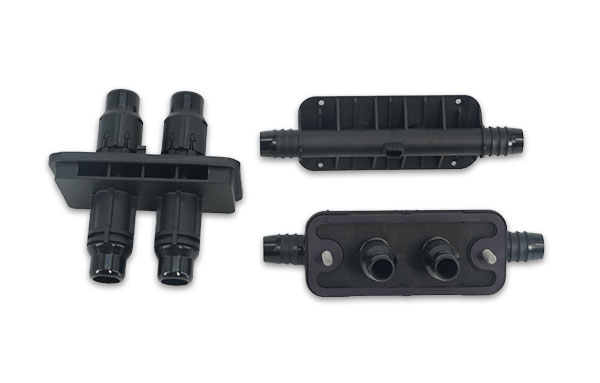
Several factors influence the functionality and longevity of II. Four-way connectors:
Material Selection: Conductive metals, corrosion-resistant coatings, and durable plastics directly impact performance under high load or environmental stress.
Dimensional Accuracy: Misalignment of terminals or ports can lead to electrical arcing or fluid leakage.
Seal Integrity: For fluid applications, proper gasket or O-ring material and installation ensure leak-free operation.
Mechanical Strength: Resistance to vibration, shock, and mechanical stress prevents connection failure in dynamic applications.
Environmental Compatibility: Exposure to temperature extremes, humidity, or chemicals can degrade connector performance if not accounted for in design and material choice.
Choosing reliable suppliers is critical for consistency and quality assurance. Key considerations include:
Certification and compliance with industry standards (ISO, RoHS, UL).
Proven track record in precision connector manufacturing.
Capability for custom design or modifications.
Robust logistics and consistent delivery timelines.
Availability of technical support for installation, testing, and troubleshooting.
Long-term partnerships with suppliers who provide both components and engineering guidance can reduce operational risk and improve product reliability.
Despite advancements, several challenges persist:
Connector Wear: Frequent connect-disconnect cycles can cause terminal deformation or insulation wear.
Leakage in Fluid Connectors: Poor sealing or material incompatibility can result in fluid loss.
Electromagnetic Interference: In sensitive electrical applications, shielding deficiencies may cause signal degradation.
Size Constraints: Integrating four connections in compact spaces without performance compromise is often challenging.
Proactive design, proper material selection, and rigorous testing help mitigate these issues.
The II. Four-way connector finds extensive applications across multiple industries:
Automotive: Distributing signals from control modules to sensors and actuators within confined engine compartments.
Industrial Automation: Interconnecting robotic arms and machinery with multiple electrical or pneumatic pathways.
Aerospace: Managing multi-channel avionics connections where space and weight are critical.
Energy Systems: Routing power and control signals in renewable energy installations such as solar or wind systems.
Medical Equipment: Ensuring reliable electrical and fluidic pathways in complex diagnostic or therapeutic devices.
Case studies indicate that modular, high-precision connectors improve maintenance efficiency, reduce downtime, and enhance overall system reliability.
Emerging trends in II. Four-way connector technology include:
Miniaturization: Compact designs allow integration into smaller, more complex systems without performance loss.
Smart Connectors: Integration of sensors or monitoring features to detect connection status, temperature, or flow anomalies.
High-Performance Materials: Use of advanced composites and conductive polymers for lightweight, durable, and corrosion-resistant designs.
Additive Manufacturing: 3D printing and advanced molding techniques enable rapid prototyping and customized geometries.
Sustainability: Eco-friendly materials and recyclable components are gaining traction to reduce environmental impact.
The future of II. Four-way connectors will likely emphasize multifunctionality, reliability in extreme environments, and integration with intelligent systems for predictive maintenance.
Q1: Can II. Four-way connectors Handle high current loads?
A: Yes, provided that the terminal materials, contact area, and housing design are optimized for the expected electrical load.
Q2: Are fluidic and electrical versions interchangeable?
A: No. Fluidic connectors require specific sealing and pressure ratings, while electrical connectors focus on conductivity and insulation.
Q3: How is connector lifespan measured?
A: Through cycles of connection/disconnection, environmental testing, and performance monitoring over time.
Q4: Can they be customized for specific applications?
A: Yes. Many suppliers offer custom configurations for terminal spacing, material choice, and housing dimensions.
The II. Four-way connector is a critical component across a range of industries, supporting efficient electrical and fluidic distribution in compact, complex systems. Understanding its core technology, material choices, performance factors, and supplier standards is essential for engineers and procurement professionals. As industrial automation, miniaturization, and smart manufacturing continue to advance, II. Four-way connectors are poised to evolve with higher precision, multifunctionality, and enhanced reliability, meeting the growing demands of modern industrial applications.
This website uses cookies to ensure you get the best experience on our website.


 Español
 Deutsch
 日本語
日本語 한국어
한국어



 WhatsApp
 Phone
Phone