


 Español
 Deutsch
 日本語
日本語 한국어
한국어
Master control terminal
Master Control Terminal: Centralized Command for Operational Efficiency A Master Control Terminal (MCT) is a centralized interface designed to monitor, manage, and control multiple systems or processes within an operational environment. It serves as the nerve center for real-time decision-making, ensuring seamless coordination across interconnected subsystems. By integrating data visualization, automation, and remote control capabilities, an MCT enhances efficiency, reduces human error, and optimizes resource allocation. Core Functions 1. Real-Time Monitoring The MCT aggregates live data from sensors, devices, or software modules, presenting it via dashboards with customizable alerts. Operators gain situational awareness through graphical representations (e.g., maps, charts, or logs) to detect anomalies promptly. 2. Centralized Control Commands can be issued across distributed systems—such as industrial machinery, IT networks, or energy grids—from a single point. This eliminates the need for manual intervention at individual nodes, streamlining workflows. 3. Automation & Scripting Predefined protocols or AI-driven logic enable automated responses to routine tasks (e.g., load balancing, emergency shutdowns). Scripting tools allow customization for scenario-specific actions. 4. Security & Access Management Role-based permissions restrict terminal access to authorized personnel. Encryption and audit trails safeguard against unauthorized operations or data breaches. 5. Diagnostics & Reporting Historical data analysis helps identify trends, predict failures, and generate compliance reports. Diagnostic tools facilitate troubleshooting without physical inspections. Applications - Industrial Automation: Supervising production lines, robotics, or HVAC systems. - Critical Infrastructure: Managing power distribution, water treatment, or transportation networks. - IT Operations: Overseeing server clusters, cybersecurity alerts, or cloud resources. Advantages - Scalability: Adaptable to expanding systems via modular design. - Redundancy: Fail-safe mechanisms ensure continuity during outages. - Cost Savings: Minimizes downtime and labor requirements. Challenges - Integration Complexity: Legacy systems may require middleware for compatibility. - Overreliance Risk: Over-automation could dull human operational readiness. Future Trends Advancements in AI and IoT will further enhance MCTs with predictive analytics and edge computing, enabling autonomous decision-making in dynamic environments. In summary, a Master Control Terminal is indispensable for modern operations, merging control, visibility, and intelligence into a unified platform to drive precision and reliability.
Products
Category:
-
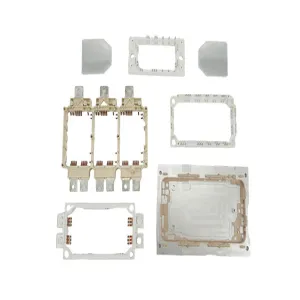
Master control terminal
Category: AutomotiveBrowse number: 13Number:Release time: 2025-12-16 13:38:48Master control terminal is a centralized human–machine interface designed to manage, monitor, and coordinate complex systems across industrial, medical, or automation environments. It integrates control logic, data visualization, and user input into a single platform, enabling operators to execute commands accurately and efficiently. Typically built with high-reliability processors, responsive input devices, and industrial-grade materials, the terminal supports stable operation in demanding conditions. Its modular architecture allows compatibility with multiple subsystems, communication protocols, and software platforms. By improving operational visibility and control precision, the master control terminal plays a critical role in system safety, efficiency, and real-time decision making.
News
Category:
No search results found!
Case
Category:
No search results found!
Video
Category:
No search results found!
Download
Category:
No search results found!
Job
Category:
No search results found!
Featured Products
No search results found!



 WhatsApp
 Phone
Phone