


 Español
 Deutsch
 日本語
日本語 한국어
한국어
Two-color LENS injection molded parts
Two-color LENS (Laser-Enabled Net Shaping) injection molded parts represent an advanced manufacturing technique that combines the precision of laser-assisted additive manufacturing with the efficiency of traditional injection molding. This hybrid process enables the production of complex, high-performance components with two distinct colors or materials in a single manufacturing cycle, offering significant advantages in terms of design flexibility, functionality, and aesthetics. Process Overview The two-color LENS injection molding process begins with the creation of a mold designed to accommodate two different materials or colors. A laser is used to selectively deposit or modify material layers in specific regions of the mold, ensuring precise material placement before the injection molding phase. Once the laser-assisted structuring is complete, the mold is closed, and the first material is injected. After partial cooling, the mold reconfigures (either by rotation or shifting), and the second material is injected, bonding seamlessly with the first layer. The result is a single, integrated part with two distinct colors or material properties. Key Advantages 1. Enhanced Aesthetics & Branding – Two-color molding allows for visually striking designs, eliminating the need for secondary painting or assembly. This is particularly useful for consumer electronics, automotive interiors, and medical devices where color contrast improves usability. 2. Improved Functionality – By combining materials with different properties (e.g., rigid and soft-touch surfaces), parts can achieve better ergonomics, grip, or vibration dampening. 3. Reduced Assembly Steps – Since two materials are molded together, post-processing steps like gluing or welding are minimized, lowering production costs and improving structural integrity. 4. Precision & Consistency – The LENS process ensures high accuracy in material deposition, reducing waste and ensuring uniform quality across batches. Applications - Automotive – Multi-color buttons, knobs, and dashboard components with integrated soft-touch surfaces. - Consumer Electronics – Keypads, smartphone cases, and wearable devices with contrasting colors or textures. - Medical Devices – Ergonomic handles or grips with dual-material construction for comfort and hygiene. - Industrial Equipment – Durable, multi-material components requiring wear resistance in specific zones. Challenges & Considerations While two-color LENS injection molding offers numerous benefits, it requires precise mold design and material compatibility to ensure proper bonding between layers. Thermal expansion differences between materials must be carefully managed to prevent warping or delamination. Additionally, the initial tooling costs can be higher than conventional molding, making it more suitable for high-volume production. Conclusion Two-color LENS injection molding is a cutting-edge solution for creating high-performance, visually appealing, and functionally optimized parts. By integrating laser-assisted structuring with injection molding, manufacturers can achieve complex geometries and material combinations that were previously difficult or costly to produce. As industries demand more sophisticated and customized components, this technology is poised to play a crucial role in modern manufacturing.
Products
Category:
-
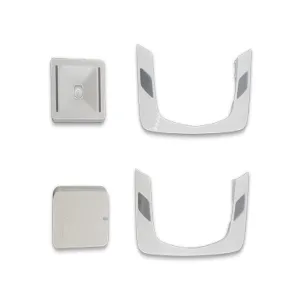
Two-color LENS injection molded parts
Category: 3C categoryBrowse number: 15Number:Release time: 2025-12-16 15:44:38Two-color LENS injection molded parts are optical components manufactured using dual-shot injection molding to combine two materials or optical properties within a single lens structure. This process enables precise integration of transparent, diffused, or tinted areas without secondary assembly, improving alignment accuracy and long-term stability. Such parts are widely used in automotive lighting, consumer electronics, medical devices, and industrial sensors where optical performance and visual differentiation are both critical. By reducing part count and enhancing design flexibility, two-color lens molding supports compact product architectures, consistent light control, and scalable mass production while maintaining strict optical and dimensional tolerances.
News
Category:
-
[Industry News]Injection Molding Manufacturing Cost Optimization
2026-01-04 15:11:42
Case
Category:
No search results found!
Video
Category:
No search results found!
Download
Category:
No search results found!
Job
Category:
No search results found!
Featured Products
No search results found!



 WhatsApp
 Phone
Phone