


 Español
 Deutsch
 日本語
日本語 한국어
한국어
Ultrasound needle
Ultrasound Needle: A Breakthrough in Precision Medicine The ultrasound needle represents a significant advancement in medical technology, combining the precision of needle-based procedures with real-time imaging capabilities. This innovative device integrates ultrasound guidance directly into the needle itself, allowing clinicians to visualize anatomical structures and target tissues with unprecedented accuracy during minimally invasive procedures. Design and Functionality An ultrasound needle is a specialized medical instrument equipped with a miniature ultrasound transducer at its tip. Unlike traditional needles, which rely on external imaging systems for guidance, this device provides direct, real-time feedback as it penetrates tissue. The transducer emits high-frequency sound waves that create detailed images of surrounding structures, ensuring precise placement while minimizing the risk of complications. The needle’s design typically includes a hollow core for fluid aspiration or drug delivery, making it suitable for a wide range of applications, such as biopsies, nerve blocks, or vascular access. Its compact size and high-resolution imaging capabilities enable clinicians to navigate complex anatomical regions with greater confidence. Clinical Applications 1. Biopsies and Tissue Sampling Ultrasound-guided biopsies are commonly used to diagnose cancers or other abnormalities. The ultrasound needle enhances accuracy by providing continuous visualization, reducing the need for repeated insertions and improving diagnostic yield. 2. Pain Management and Nerve Blocks In regional anesthesia, precise needle placement is critical to avoid nerve damage or ineffective pain relief. The ultrasound needle allows anesthesiologists to visualize nerves and surrounding vasculature in real time, improving the safety and efficacy of nerve blocks. 3. Vascular Access Inserting central venous catheters or performing difficult peripheral IV placements becomes safer with real-time ultrasound guidance. The needle’s imaging capability helps avoid accidental punctures of arteries or other critical structures. 4. Therapeutic Injections For conditions like joint inflammation or tendon injuries, the ultrasound needle ensures accurate delivery of medications (e.g., corticosteroids) to the exact target site, enhancing therapeutic outcomes. Advantages Over Conventional Techniques - Enhanced Precision: Direct visualization reduces reliance on external imaging and minimizes human error. - Improved Safety: Lower risk of damaging adjacent tissues, nerves, or blood vessels. - Efficiency: Fewer needle adjustments and faster procedure times. - Versatility: Adaptable to various medical specialties, from oncology to anesthesiology. Future Developments As technology evolves, future iterations may incorporate AI-assisted image analysis, wireless connectivity, or even robotic assistance to further refine procedural accuracy. The integration of advanced materials could also improve durability and signal clarity. Conclusion The ultrasound needle is revolutionizing minimally invasive medicine by merging imaging and intervention into a single, streamlined tool. Its ability to provide real-time, high-resolution imaging at the needle tip enhances procedural success rates while improving patient safety. As adoption grows, this technology has the potential to become a standard in precision-guided medical interventions.
Products
Category:
-
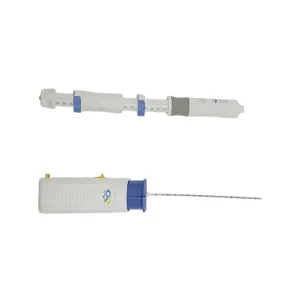
Biopsy needle, ultrasound needle
Category: Medical equipment categoryBrowse number: 11Number:Release time: 2025-12-16 10:25:00A biopsy needle, including ultrasound-guided variants, is a precision medical instrument designed for safe and accurate tissue sampling. These needles allow clinicians to extract cellular or fluid samples from specific organs or lesions for diagnostic purposes, minimizing patient trauma compared to surgical biopsies. Ultrasound-guided needles feature echogenic markings or specialized coatings to enhance visibility under imaging, improving targeting accuracy. Constructed from biocompatible stainless steel or alloys, they provide strength, corrosion resistance, and smooth penetration. Ergonomic handles and optional stylets ensure controlled insertion, reliable sample capture, and consistent performance across diverse clinical applications, including oncology, radiology, and minimally invasive procedures.
News
Category:
No search results found!
Case
Category:
No search results found!
Video
Category:
No search results found!
Download
Category:
No search results found!
Job
Category:
No search results found!
Featured Products
No search results found!



 WhatsApp
 Phone
Phone